Resolve SuiteCommerce Configuration Error
If you receive an invalid field value error message when trying to load a SuiteCommerce Configuration, this fix may be useful to you!
Read the Article

When moving a SuiteCommerce website from Sandbox to Production (or vice versa), one of the required steps is to copy the Configuration Record and paste it into the new site. The fastest way to do this is to copy the configuration JSON.
For more information, check out the article written by my teammate Caleb back in August of 2022 How to Copy or Move a SuiteCommerce Configuration Record.
While copying the Configuration JSON is helpful and speedy, it is wise to double-check that all areas of the Configuration Record are correctly set up. Below are often troublesome areas to verify that are configured after the copy.
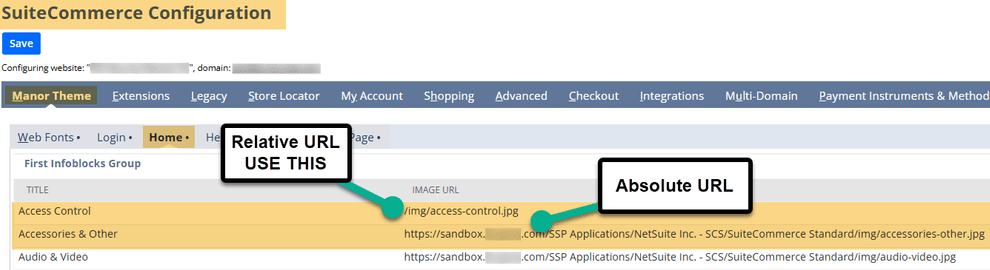
Use Relative URLs

For more information on SuiteCommerce Images, check out the Complete Guide to SuiteCommerce Images, which our team assembled back in September of 2024!

For more information, check out this Facet Field Setup Tutorial that my teammate Jacob wrote back in December of 2023.


Though this list is not comprehensive, it should be a jump start to making sure that your site’s configuration JSON was copied correctly!
We like to update our blogs and articles to make sure they help resolve any troubleshooting difficulties you are having. Sometimes, there is a related feature to enable or a field to fill out that we miss during the instructions. If this article didn't resolve the issue, please use the chat and let us know so that we can update this article!
If you liked this article, you'll LOVE our book on SuiteCommerce! Order the free SuiteCommerce book today, and we'll even pay for shipping!
If you have questions about how our team can support your business as you implement NetSuite or SuiteCommerce, feel free to contact us anytime. Anchor Group is a certified Oracle NetSuite Alliance Partner and Commerce Partner equipped to handle all kinds of NetSuite and SuiteCommerce projects, large or small!

We are a premium SuiteCommerce agency that creates powerful customer portals. Unlike our competitors, we have already solved your problems.
Related Articles
Tagged with Training