BigCommerce headless commerce separates your storefront from the BigCommerce backend, giving B2B and B2C businesses more control over the customer experience while BigCommerce handles the commerce functionality behind it. This flexible headless ecommerce architecture can be valuable for custom storefronts, content-driven websites, complex integrations, and businesses operating across multiple channels, but it also introduces more development and architecture decisions, which is why headless works best when that added flexibility solves a real business problem.
When BigCommerce Headless Commerce Starts to Make Sense
Most businesses don't need a headless storefront just because one is available. It starts becoming interesting when the traditional architecture gets in the way, maybe your customer experience needs more customization, content plays a larger role in how people buy, multiple websites need to share the same commerce backend, or your ERP and other business systems have become a bigger part of the ecommerce experience. In those situations, BigCommerce can continue doing the commerce work behind the scenes while a custom frontend gives you more control over what customers actually see and use.
BigCommerce is a SaaS ecommerce platform that can also serve as the commerce backend for a headless storefront. In a headless commerce architecture, the frontend presentation layer is separated from BigCommerce and communicates with the platform through headless commerce APIs. This allows businesses to build a custom frontend while continuing to use BigCommerce for products, carts, checkout, customers, orders, promotions, and other core ecommerce functionality.
That separation gives businesses more control over the customer experience and the technologies used to build it. The frontend could be developed with a framework such as Next.js or React, while BigCommerce continues doing the commerce work behind the scenes. Other systems, including a headless CMS, ERP, CRM, or PIM, can also become part of the larger headless commerce stack.
The result is a more flexible headless commerce platform architecture, but also one with more moving parts. Your frontend, BigCommerce backend, APIs, integrations, and other business systems all need clear responsibilities and reliable ways to exchange information. That's why a successful headless implementation is about more than building a custom storefront. It's about designing an architecture your business can actually operate and maintain.
Traditional Commerce is Like a Model Home
Traditional commerce platforms give you an established ecommerce architecture where the frontend and backend are designed to work together. You can still customize the storefront, but you're working within more of the platform's existing structure.
That's not necessarily a bad thing. For many businesses, the standard architecture already supports what they need while keeping implementation, development, and ongoing maintenance simpler. You can remodel the kitchen without deciding where the plumbing should have gone in the first place.
Headless Commerce is Like a Custom-built Home
Headless commerce gives you considerably more control over the floor plan. Because the frontend is decoupled from the ecommerce backend, developers have more freedom to choose the technologies, experiences, and architecture that fit the business.
That flexibility can be valuable when you need a highly customized storefront, multiple frontend experiences, unusual content requirements, or greater control over performance and scalability. It also means more architectural decisions are yours to make.
Custom homes are great when you actually need a custom home. They're an expensive way to get a different kitchen backsplash.
BigCommerce Headless Commerce Stack
Primary Elements of Enterprise Headless Commerce
A BigCommerce headless commerce stack isn't one piece of software. It's a collection of headless commerce tools, software, and technology with different responsibilities, connected through an API layer so they can work together as one ecommerce experience. The specific headless commerce technology you use can vary, but most stacks include a few core components.
The goal isn't to collect as many headless commerce tools as possible. It's to give each system a clear job and design a headless commerce stack your team can actually operate, troubleshoot, and maintain.
Ecommerce Backend — BigCommerce
BigCommerce serves as the back-end platform and commerce engine, handling functionality such as products, pricing, customers, carts, checkout, orders, and promotions. In a BigCommerce headless commerce implementation, this functionality remains behind the scenes while a separate frontend controls the customer-facing experience.
Frontend — Next.js, React, Vue.js, or Another Framework
The front-end framework powers the customer-facing storefront. Separating it from the BigCommerce backend gives developers more control over design, performance, content, and how customers interact with the ecommerce experience.
Headless Commerce APIs & Integrations
Headless commerce APIs form the connection between the frontend and backend. This API layer can also connect your ecommerce operation with an ERP, CRM, PIM, payment platform, or other business systems.
Headless Commerce CMS
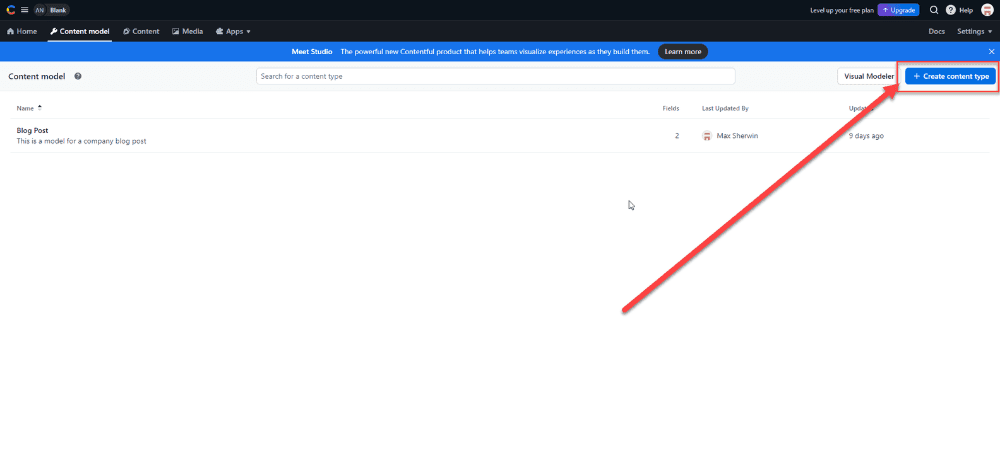
A headless commerce CMS, or content management system, such as Contentful can give marketing and content teams control over pages and content without requiring developers to hard-code every update. Additional headless commerce software can also be incorporated into the stack when the business has a clear need for it.
How Does Headless Commerce Work?
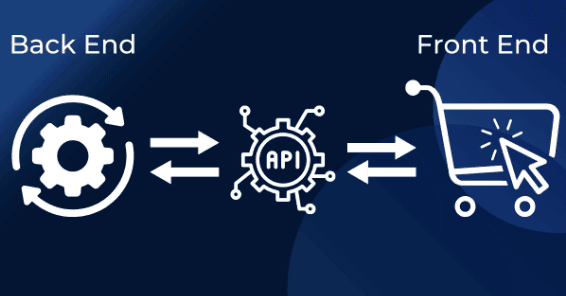
Headless commerce architecture separates the customer-facing frontend from the ecommerce backend. Unlike traditional ecommerce development, where the front-end and back-end are typically built as a connected system, a headless approach decouples those layers and gives businesses more freedom to select the tech stack used to build the customer experience.
When a customer visits a headless ecommerce website, they interact with the frontend application rather than a storefront that's directly coupled to the ecommerce backend. The frontend uses APIs to request the products, pricing, customer information, cart data, checkout functionality, and other commerce information it needs from BigCommerce.
BigCommerce handles the commerce logic behind the scenes while the frontend determines how that information is presented to the customer. Because the two layers are decoupled, developers have more flexibility to change or rebuild the frontend without replacing the underlying BigCommerce commerce engine.
Other business systems can participate too. Your ERP might own inventory or customer-specific pricing, a PIM might manage product information, and a headless CMS might control editorial content. APIs and integrations move that information between systems and ultimately make it available to the storefront.
That's where headless commerce starts getting more complicated. Separating the frontend gives you more control over your technology stack and customer experience, but somebody still needs to decide which system owns each piece of information, how that information gets where it needs to go, and what happens when one of those connections doesn't behave the way everyone expected. More flexibility is useful. It also gives you more decisions to get right.
High-level view of BigCommerce headless commerce architecture
Headless Commerce Explained
A Practical Walkthrough of How Headless Ecommerce Works
If you want to see the architecture explained rather than just read about it, this episode of the Anchor Group Podcast walks through the basics of headless commerce with Max, a BigCommerce developer. The conversation covers how a headless commerce platform separates the frontend from the backend, how BigCommerce supports headless ecommerce for B2B and DTC brands, and where benefits like customization, site speed, scalability, and development flexibility actually come from. They also get into the tradeoffs and challenges that are easy to gloss over when headless is presented as the obvious next step.
Is Headless Commerce Right for Your Business?
The right architecture depends on where your business is headed.
Not every ecommerce business needs a headless commerce solution. For many organizations, a traditional BigCommerce storefront provides everything they need while keeping implementation, maintenance, and ongoing development simpler.
As businesses grow, though, their requirements sometimes outgrow a traditional architecture. Marketing teams want more control over the customer experience. Multiple websites need to share the same commerce engine. Performance expectations increase. Integrations become more sophisticated. Content strategies become more ambitious.
When those requirements start shaping the business, headless commerce becomes worth considering.
Our team helps organizations evaluate whether a headless approach makes sense for their goals, then designs and develops BigCommerce headless commerce solutions that balance flexibility, performance, and long-term maintainability. We recommend headless when it solves a real business problem, not simply because it's the newest architecture.
Traditional BigCommerce may make more sense when...
You need a highly customized customer experience.
BigCommerce's traditional storefront already supports your requirements.
Multiple websites or digital experiences need to share the same commerce backend.
You're operating one relatively straightforward ecommerce storefront.
Content plays a major role in how customers discover and buy products.
Your content requirements are relatively simple.
Your performance requirements justify greater control over the frontend.
Your existing BigCommerce storefront already meets your performance needs.
Your team has the development resources to maintain a custom frontend.
Simpler development and maintenance are more valuable than additional flexibility.
Your ERP, PIM, CMS, or other systems play a major role in the ecommerce experience.
Most of the ecommerce operation can comfortably live within BigCommerce.
The additional flexibility creates measurable business value.
Headless would add technology without solving a specific business problem.
None of the items on the right automatically rule out headless commerce. They mean the additional flexibility needs to earn its keep. If a traditional BigCommerce storefront already does what the business needs, adding another application, API layer, deployment process, and maintenance responsibility isn't automatically an upgrade.
Headless Commerce for B2B
Headless commerce can make sense for B2B organizations when the buying experience needs to go beyond a conventional ecommerce storefront. That might include customer-specific catalogs and pricing, complex purchasing workflows, multiple brands or websites, content-heavy buying experiences, or deeper connections with an ERP such as NetSuite.
Headless doesn't make those requirements disappear. What it gives you is more control over how the frontend handles them while BigCommerce and your other business systems do their jobs behind the scenes.
For B2C businesses, headless commerce can make sense when the customer experience needs more flexibility than a traditional ecommerce storefront provides. That might include highly customized shopping experiences, content-driven commerce, multiple brands or storefronts, greater control over site performance, or experiences that need to work across multiple digital channels.
With BigCommerce headless commerce, developers can build a custom frontend around those requirements while BigCommerce continues handling products, pricing, carts, checkout, orders, promotions, and other ecommerce functionality behind the scenes.
That flexibility can be valuable, but it also comes with additional development and maintenance responsibilities. If a traditional BigCommerce storefront already gives your B2C business the experience and performance it needs, going headless may simply add architecture you now have to maintain.
Headless Commerce Development Company with US-based BigCommerce Developers
Our headless commerce consultants and US-based BigCommerce headless commerce developers help businesses plan, build, integrate, migrate, and support BigCommerce headless commerce solutions. As a headless commerce development company, Anchor Group provides headless commerce development services ranging from custom frontend development and API integrations to backend system customization, performance optimization, headless commerce migrations, and new implementations. The work varies considerably from project to project, which is sort of the point of going headless, but most projects fall into a few common areas.
Our BigCommerce Headless Commerce Development Services
Custom Front-end Development
We build custom headless ecommerce frontends using technologies such as Next.js and React, with BigCommerce handling the commerce functionality behind the scenes. Our custom front-end development gives businesses more control over design, user experience, performance, content, and how the storefront interacts with other systems. We use that flexibility where it creates value without turning the frontend into something only the original developer knows how to maintain.
Headless Commerce API Integrations
The storefront is only part of the equation. Customer data, inventory, pricing, content, orders, and fulfillment all have to move between systems if the business is going to run smoothly.
Headless Commerce APIs make those connections possible, allowing your storefront to communicate with your ERP, CRM, CMS, PIM, and other business systems without being tied to a traditional ecommerce frontend. The technology is important, but the outcome is what really matters: information moves where it should, manual work goes away, and your team gains the freedom to improve one part of the ecosystem without rebuilding everything else.
Ecommerce Backend & ERP Customization
Going headless doesn't mean every requirement belongs in the frontend. Sometimes the better solution is changing the system behind it. We customize and optimize BigCommerce, NetSuite, and other backend systems to align with the business processes supporting your ecommerce operation. That starts with determining where functionality and business logic should actually live. Keeping those responsibilities in the right system can make the entire headless commerce stack easier to maintain, and prevent the frontend from becoming responsible for things it was never meant to own.
Headless Commerce Performance Optimization
Performance is often one of the reasons businesses consider headless commerce in the first place, but a headless architecture isn't automatically fast. We optimize BigCommerce headless commerce storefronts for site speed, technical SEO, scalability, and reliability while looking at the full architecture behind the experience. Frontend code, APIs, third-party services, images, content delivery, and integrations can all affect performance. Headless gives you more control over those decisions. It also means they're your decisions to get right.
Don't see the BigCommerce service you need?
This is far from being an exhaustive list of the BigCommerce services offered by our team here at Anchor Group. Get in touch with us to ask about the BigCommerce support you are looking for.
What Our Customers Say
The team at Anchor Group has been great to work with. So much so, that we even nominated them for an award with BigCommerce. They're true experts in NetSuite and Ecommerce... and they're great a great group of people.
Robert Rand
Google Review
Collin from Anchor Group was exceptional in leading our franchisee's website launch. His clear communication, attention to detail, and problem-solving skills made the process seamless. Highly recommend Collin for outstanding leadership and results!
Mia Hu
Google Review
Colin was outstanding supporting us! We're very happy we worked with Anchor and highly recommend Colin's expertise and knowledge as well as The Anchor Group. Thank you!
AnneMarie Peachey
Google Review
Anchor Group took the time to listen to our needs, suggest creative solutions to accommodate our requirements, and provided honest feedback every step of the way. Post go-live, Anchor has always been in our corner to help with any issues or questions that have arisen.
In the ecommerce space one of the most important layers to a site is the CMS or Content Management System. This will allow our clients to dynamically update their BigCommerce application without ever having to touch the code base, all from a user-friendly user interface.
Catalyst is a composable, Headless starter kit released by BigCommerce in early 2025. Catalyst stores can literally be launched in minutes from the BigCommerce backend with the click of a button.
Learn what headless commerce is, how it works, and when it’s worth the investment. A clear, honest guide for ecommerce teams evaluating headless architecture.
What a large-scale, cross-platform ERP go-live recovery and optimization looks like, and all the nitty gritty details that implementation partners don't like to talk about.
Headless commerce separates the front-end (customer experience) from the back-end (operations), letting you create customized, seamless experiences across multiple platforms. This approach gives you more freedom to select the tech stack you want for your website, and the ability to innovate and scale while ensuring the back-end systems run efficiently behind the scenes.
Yes, headless commerce is very flexible. It decouples the front-end and back-end, so businesses can create unique, personalized customer experiences across multiple channels and platforms. It enables faster updates, easier integrations, and the ability to scale without the limits of a traditional ecommerce system.
Headless commerce architecture is a system where the front-end (the user-facing part) is completely decoupled from the back-end (the system that manages inventory, orders, and other processes). It relies on APIs to connect the front-end to the back-end, enabling greater flexibility and scalability.
There are many benefits of headless commerce. Some include:
Customization - Headless commerce enables businesses to create unique, tailored front-end experiences without being limited by traditional platform templates.
Faster Updates - By decoupling the front-end and back-end, businesses can quickly update and change the user interface without affecting back-end operations.
Great Performance - The decoupled architecture enables faster load times and allows for independent scaling of operations, handling increased traffic more efficiently.
Scalability - Headless commerce allows businesses to scale their operations independently by separating the front-end and back-end. This means that the back-end can handle increased traffic and complex operations without affecting the front-end experience.
Integrations - Headless commerce seamlessly integrates with third-party tools, including CRMs, marketing platforms, and payment systems, thereby enhancing business operations and customer insights.
There are a few steps you need to take to get started with headless commerce. First, choose a platform that supports headless architecture (i.e., like BigCommerce). Second, select a front-end technology, such as React, Vue.js, or Angular. This will be used to build the customer-facing experience. Third, set up APIs to integrate the front-end with your back-end systems.
*It’s important to work with developers who understand both the headless commerce back-end and headless commerce front-end processes, or partner with an agency like Anchor Group that specializes in building scalable, flexible ecommerce solutions.
Need Help Figuring Out Headless Commerce?
You don't need to decide to go headless before talking to us.
Bring us the storefront requirements, performance problems, content needs, integrations, ERP questions, or whatever else has you considering a different ecommerce architecture. We'll help you figure out whether BigCommerce headless commerce actually solves the problem.
If it does, our BigCommerce developers can help architect and build it. If a traditional BigCommerce storefront would accomplish the same thing with less complexity, we'd rather tell you that before you start paying developers to separate things that were perfectly happy together.