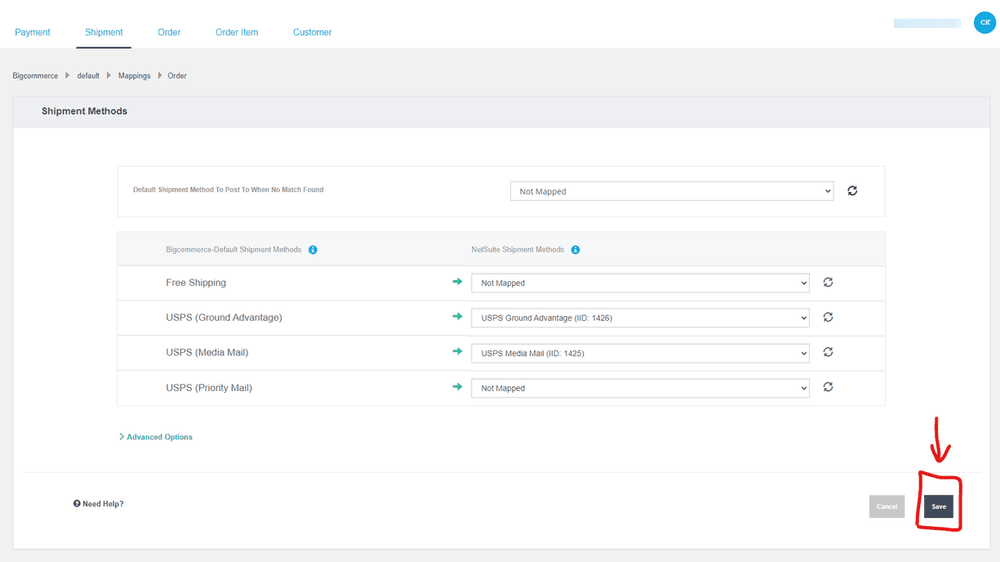
Integration Consulting & Assessment
We analyze your existing ecommerce processes, data flows, and operational architecture to design the ideal integration approach—prebuilt, hybrid, or from-scratch custom development.
 Inquire Now
Connect Your Storefront and ERP Without the Manual Workarounds
Anchor Group's team of NetSuite BigCommerce experts helps businesses build, improve, and support BigCommerce NetSuite integrations so orders, inventory, customers, products, fulfillment, and financial data move between BigCommerce and NetSuite the way they should. Whether you're replacing manual data entry, fixing an integration that's become unreliable, or building a more complicated B2B or omnichannel ecommerce workflow, our certified NetSuite and BigCommerce integration experts can help you determine what should sync, which system should own the data, and the simplest reliable way to connect them.
A seamless BigCommerce NetSuite integration is essential for e-commerce companies that want real-time visibility, automated order management, accurate inventory tracking, and efficient fulfillment workflows inside NetSuite ERP. Anchor Group specializes in designing, implementing, and optimizing BigCommerce-to-NetSuite integrations that eliminate manual data entry, reduce errors, and streamline operations from cart to cash.
Whether you’re scaling your online store, launching multiple sales channels, or upgrading from fragmented systems, our integration architects ensure your BigCommerce storefront communicates flawlessly with NetSuite’s financial, inventory, and operational modules.

The relationship between NetSuite BigCommerce systems is powerful: BigCommerce drives your online sales while NetSuite manages your entire backend, inventory, financials, fulfillment, CRM, purchasing, and analytics.
Building the proper integration between these two platforms ensures:
Anchor Group helps companies unify these workflows with high-performance integrations that support rapid growth and operational efficiency.

NetSuite + BigCommerce Is a Powerful Combination
BigCommerce gives ecommerce teams an enterprise ecommerce platform for selling online, while NetSuite gives the rest of the business a place to manage multi-entity accounting, inventory management, purchasing, fulfillment, CRM, and other ERP processes. Put them together properly, and each system can focus on the job it does best.
For growing ecommerce and omnichannel businesses, that can mean fewer orders entered by hand, more reliable inventory across sales channels, faster fulfillment updates, cleaner financial data, and less time spent figuring out why BigCommerce says one thing while NetSuite says another.
The important part is deciding where each process belongs. We help businesses configure BigCommerce and NetSuite around those responsibilities so the integration remains understandable as transaction volume, sales channels, entities, inventory locations, and operational complexity grow.

You don't need a custom integration just because your business is complicated. If a prebuilt BigCommerce NetSuite connector can handle your requirements cleanly, that's usually a very good place to start.
The decision comes down to your actual data flows, transaction volume, business rules, and exceptions. Standard orders, inventory, fulfillment, customers, and products can often be handled through an existing connector or integration platform. Custom development starts making more sense when you have unusual order flows, complex B2B pricing, multiple warehouses or storefronts, specialized fulfillment rules, subscription requirements, or other processes that don't fit comfortably inside the prebuilt options.
Anchor Group works with both prebuilt and custom BigCommerce NetSuite integrations, so the goal isn't to sell you whichever approach involves the most development. It's to use the simplest option that reliably supports the business.

Start With the Data, Not the Connector
Before choosing a BigCommerce NetSuite connector, map out what actually needs to move between the systems. That means more than making a list of records. You also need to know which direction the data should travel, which system owns it, how quickly it needs to sync, and what should happen when something goes wrong. Those details tend to matter more than the connector logo on the box. Here are some of the most common data flows we work through when planning a BigCommerce NetSuite integration.

Orders typically need to move from BigCommerce into NetSuite with enough detail for accounting, fulfillment, customer service, and downstream operations to do their jobs.
That may include:
The important part isn't simply creating an order in NetSuite. It's creating the right transaction with the right data so the rest of the order-to-cash process can continue without someone cleaning it up by hand.

Inventory usually flows from NetSuite back to BigCommerce so shoppers see availability that reflects what the business can actually sell.
Depending on your inventory setup, that can include:
Reliable inventory sync helps reduce overselling and gives teams better visibility across ecommerce, warehouses, retail locations, and other sales channels.
Product data can also flow from NetSuite into BigCommerce so merchandising and operational data stay aligned.
Common fields include:
Which system should own each field depends on how your merchandising and ERP teams actually work. That's worth deciding before building the integration rather than discovering it six months later.

Customer data may need to move in one direction or both directions depending on your sales process.
That can include:
For B2B ecommerce especially, customer records often carry more operational weight than they do in a simple consumer storefront.

Once NetSuite handles fulfillment, BigCommerce needs the information required to keep customers informed.
That may include:
This is one of those flows that customers notice very quickly when it doesn't work.
Refunds, returns, and RMAs need to stay aligned with ecommerce activity and financial records.
A good integration accounts for what happens when an order doesn't follow the happy path, because eventually one won't.
If you're trying to determine what should move between BigCommerce and NetSuite, or why an existing integration isn't behaving the way you expected, talk to a team that works on both sides of the connection.
We analyze your existing ecommerce processes, data flows, and operational architecture to design the ideal integration approach—prebuilt, hybrid, or from-scratch custom development.
Inquire Now Anchor Group works with leading middleware platforms, including: Celigo Integrator.io, Patchworks, Dell Boomi, Workato, FarApp (now part of Oracle NetSuite). We help you evaluate, configure, and optimize these tools for your BigCommerce environment.
Inquire Now When out-of-the-box tools can’t meet your requirements, Anchor Group builds fully custom integrations using: REST APIs & GraphQL, SuiteScript 2.x, Webhooks, SuiteTalk. This is ideal for companies with: Unique order flows, Complex product catalogs, Multi-warehouse logistics, Subscription products, B2B portals, Custom discount rules.
 Inquire Now
 We help migrate or correct: Existing customer data, SKUs & product attributes, Historical transactions, Pricing structures, Inventory levels
 Inquire Now
 Your integration isn’t just launched—it’s maintained. Anchor Group provides continuous monitoring, updates, troubleshooting, and improvements to ensure long-term stability and performance.
 Inquire Now
 Some integrations only need to move orders and inventory. Others have considerably more going on behind the scenes. Our BigCommerce NetSuite integration work can support more complex ecommerce and ERP requirements such as multi-entity operations, omnichannel inventory, wholesale workflows, 3PL logistics, and automated accounting.


For organizations running multiple BigCommerce stores, subsidiaries, or international operations, NetSuite OneWorld and the integration architecture around it may need to support:
The integration needs to respect those entity and regional boundaries rather than flattening everything into one very confusing pile of data.

Inventory gets more complicated when the same products are being sold through BigCommerce, retail stores, marketplaces, and other channels at the same time. A BigCommerce NetSuite integration can use NetSuite inventory data to help keep availability aligned across:
The point isn't simply having more sales channels. It's knowing what you actually have available to sell across all of them—and getting that information back to the places where customers are placing orders.

B2B ecommerce introduces data relationships and purchasing rules that don't always show up in a standard B2C storefront.
A BigCommerce NetSuite integration can support requirements such as:
Those requirements usually need to be mapped carefully because pricing, customers, credit, and order handling often touch several NetSuite processes at once.
NetSuite can remain the financial system of record while BigCommerce handles the online buying experience.
Depending on the accounting requirements, the integration may need to support:
That part matters because an ecommerce integration isn't finished when the order reaches NetSuite. Finance still needs the numbers to reconcile when it's time to close the books.
One Team That Understands Both Sides of the Integration
Integrations get harder when one vendor knows BigCommerce, another knows NetSuite, a third owns the middleware, and everyone has a slightly different theory about where the problem lives.
Anchor Group works across the storefront, ERP, integration layer, and the business processes connecting them. That gives our team enough context to trace problems across systems instead of stopping at whichever API boundary happens to belong to someone else.
The common thread is pretty simple: use the right tool, keep the architecture understandable, and make sure the integration works for the people who actually depend on it.

NetSuite Alliance Partner
Our team works directly with NetSuite ERP and understands the accounting, inventory, fulfillment, purchasing, and operational processes behind the integration.
BigCommerce Certified Partner
We also work directly in the BigCommerce ecosystem across ecommerce implementations, B2B, storefront development, integrations, apps, and ongoing support.
BIGDEV Certified
Our BigCommerce developers have completed platform-specific developer training in addition to their hands-on integration and development work.
US-Based Development & Consulting Team
Work directly with developers, consultants, and project managers operating during overlapping US business hours.
High-Volume Ecommerce Experience
We work with ecommerce environments where order volume, inventory movement, fulfillment, and integration reliability have real operational consequences.
SuiteScript & API Development
Our developers work with SuiteScript, REST APIs, webhooks, SuiteTalk, and other integration technologies when prebuilt functionality isn't enough.
WMS, 3PL & Omnichannel Experience
Integration work often crosses warehouses, third-party logistics providers, marketplaces, retail channels, and multiple storefronts. Our team is comfortable working across those boundaries.
Prebuilt Before Custom
If an existing connector handles the requirement well, we'd rather use it than create custom code your team has to maintain forever.
Project-Based or Ongoing Support
Some businesses need help implementing a new integration. Others need an experienced team to support and improve the environment after go-live. We can work either way.

There are three common ways to integrate BigCommerce with NetSuite. The right one depends on your data flows, transaction volume, business rules, and how much complexity the connector needs to handle.
For many businesses, this is the best place to start.
Platforms such as Celigo, FarApp, Patchworks, Boomi, and Workato provide existing connectors and integration tools for common flows such as:
These platforms can automate a large portion of the integration without requiring everything to be built from scratch.
The important question is whether the prebuilt flows actually match your business, not whether the connector technically exists.

Oracle NetSuite Connector, formerly FarApp, is designed for ecommerce integrations between NetSuite and platforms including BigCommerce, Amazon, eBay, and Shopify.
For businesses with relatively standard ecommerce requirements, it can provide a useful starting point for connecting orders, inventory, fulfillment, products, and other data with NetSuite.
As with any prebuilt connector, the fit depends on the details of your workflows.

Some businesses have requirements that simply don't fit comfortably inside a prebuilt connector.
A custom integration may use technologies such as:
Custom development can make sense when you need:
Custom doesn't automatically mean better. It means you have more control, which is useful when you genuinely need it and unnecessary when you don't.

Whether you're planning a new BigCommerce NetSuite integration, replacing manual work, or trying to figure out why an existing connector keeps creating problems, we'll help you work out what should sync, where the data should live, and the most practical way to automate the process without sacrificing accuracy.
To get orders from BigCommerce into NetSuite, you must set up an integration that pulls order data through the BigCommerce API and maps it into NetSuite sales orders. This can be done using middleware (such as Celigo, FarApp, Patchworks, or Boomi) or through custom SuiteScript/RESTlet integration.
A standard integration automates the transfer of:
Most businesses choose an integration platform like Celigo Integrator.io for ongoing reliability and ease of maintenance.
Yes. An integration can push inventory quantities from NetSuite to BigCommerce in real time or on a scheduled basis. This prevents overselling and keeps product availability consistent across channels.
Yes. Fulfillment tracking can be automatically sent from NetSuite to BigCommerce, including:
This ensures customers receive accurate shipping updates.
Yes. A properly configured integration can sync:
This ensures financial data stays accurate and eliminates manual reconciliation.
The best choice depends on complexity:
Anchor Group can help you select the best tool based on your order volume, SKU count, and operational needs.
If you need a new integration, help improving an existing one, or a second set of eyes on a connector that's become difficult to trust, our team can help. Anchor Group works across both BigCommerce and NetSuite, so we can follow the data from the storefront through ERP instead of treating each system as somebody else's problem.