
(2026 Expert Edition)
As you begin the exploration process to find how Oracle NetSuite Cloud ERP can transform your business into a powerhouse, it's a good idea to get some initial thoughts on how your NetSuite implementation might play out. The tips and tricks in this guide will give you a better chance of a smooth implementation.
It's also always a good idea to understand the costs of a NetSuite implementation. Part of the NetSuite partner selection process is to get multiple estimates. If you need to compare NetSuite pricing options, here is a NetSuite pricing calculator that will get sent out to you automatically based on your answers. It's a great place to start ballpark-estimating the cost of a NetSuite implementation.
There are several key aspects of the NetSuite Implementation process that will determine your success or failure.
Step 1: Which NetSuite Partner to use?
There are 3 key areas to consider when finding the right NetSuite Partner...
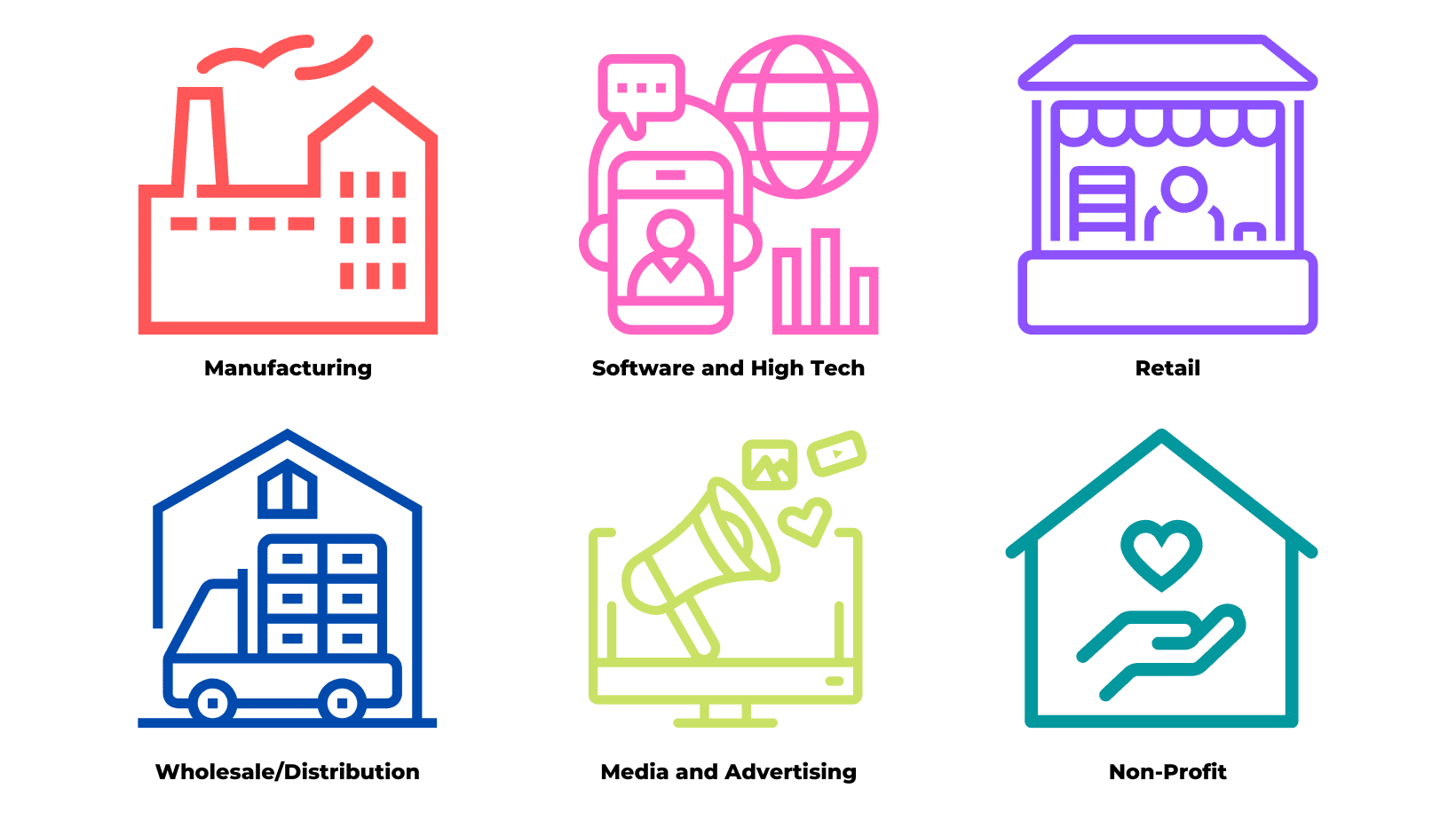
Vertical or Industry Focus
This may seem like a simple task, but it will require some time investment on your part to find the right fit for your organization. Some partners focus on specific verticals or industries and have extensive experience with particular implementations.
Long Term Success
There is never a single NetSuite implementation that doesn't require additional post-go-live support. Find out what types of support models they offer. Are the same NetSuite consultants who did the initial implementation still involved, or are they different? The more it changes hands, the more time it takes to get to know a new configuration specific to your organization.
Bandwidth Available for Your Timeline
NetSuite implementations are in high demand and quickly consume bandwidth for teams at companies of any size. If you have a tight deadline, you should reach out to smaller partners, as they typically handle fewer NetSuite implementations. This is ideal since you won't be treated as just another job you have to get done, but rather as a valued customer who needs focus and attention. If a NetSuite partner is trying to make you start later than you prefer... shop around a bit... There will be someone who is well qualified and has the availability to start right away. Most NetSuite implementations can be completed in 3 months, and only companies with annual revenue exceeding $200 million tend to take longer than that to deliver a minimum viable product. Check partner availability and get to know the consultants who will be on your implementation team prior to signing on the dotted line.
Skills for NetSuite ecommerce
If you plan to have ecommerce as a part of your NetSuite implementation. Whether integration or SuiteCommerce implementation, this is a new variable in a partner that you need to search for. There are only a handful of NetSuite partners with a skilled team capable of effectively building a SuiteCommerce Advanced website. It is critical that you find a NetSuite Certified Commerce Agency if you want SuiteCommerce for your NetSuite implementation. NetSuite ERP and SuiteCommerce are very unique skill sets. Find out what other ecommerce websites they recently implemented. If they can't state any, they are probably blowing smoke. Having ecommerce experts on staff with a proven record of ranking highly on Google, along with SuiteCommerce customizations available, will demonstrate expertise.
Should I use NetSuite Direct?
Before using NetSuite direct for the NetSuite implementation, you should spend a little time on Reddit or ask around to see what companies that used NetSuite direct thought of the process. Generally speaking, NetSuite partners can give you more dedicated focus and are highly motivated to help you succeed in the long term. If you really want to go with NetSuite direct, spend at least a few hours researching how the process has gone for other companies. There are certain cases where it may make sense.
Step 2: Requirements
You don't need to buy NetSuite licensing until after the requirements section. It's important to get requirements done and spend the money preparing a strategy for implementing the proper modules or deciding when to use minor customizations. There are definitely times when it will save you a ton of money to avoid a module with more capabilities than you need and instead use simple customization to accomplish your exact needs.
Requirements are a critical stage and allow for you to pivot before getting locked into NetSuite licensing that you don't need.
You should expect to spend at least 10-30 hours on requirements to have an effective strategy and plan in place. It will take at least 10 hours to identify the specific modules and licensing solutions your business will need.
Related Article: How to Prepare for a Successful NetSuite Implementation
Step 3: Buy Licensing and Kick-Off
Once requirements are complete, you will know exactly which modules or add-ons you need to meet all your requirements. Sometimes you can be pressured into buying faster than is prudent, and it's essential to push back to ensure requirements are fully met. If you really want to ensure you are getting the right deal, go through the requirements with at least two NetSuite partners before committing. Requirements are billable, but overpaying for add-ons you don't actually need will cost you more. So you will have to balance what you are willing to do in order to be confident in your licensing solutions.
There are a couple of options for purchasing your licensing: NetSuite Direct Sales or a NetSuite Solution Provider.

NetSuite direct sales can typically offer up to 65% off your NetSuite licensing in certain cases. Usually, this involves buying extra or signing a longer contract period. In general, you should expect at least a 30% discount off the list price.
Solution Providers likely will never discount by more than 50%, but there is a HUGE benefit to going with a solution provider that you won't really notice until you are in the system day after day. Solution providers will manage your licensing, including additional users and add-ons. For the most part, you get a better interaction and support experience through a solution provider. You can still expect to get at least 30% off the list price through a NetSuite Solution Provider.
Anchor Group is not a solution provider, but has partnered with one we really trust and have found consistently provides fantastic support. Reach out to us if you want to connect with our recommended solution provider. Anchor Group just specializes in NetSuite ERP and SuiteCommerce implementations. We work closely with other solution providers or NetSuite direct to give new customers an amazing NetSuite implementation experience. Alliance Partners differ from Solution Providers because they only implement and don't sell licenses.
Once licensing is finalized, the Kick-Off will begin as soon as your NetSuite consultants and developers have access to your NetSuite environment. It is pretty simple to grant them access, and they will begin configuring NetSuite and setting it up to your specific requirements.
You will generally get a project lead who is a functional consultant, managing the project and helping communicate all your requirements to the rest of the implementation team. We suggest you have an introductory call with your project leader before signing with any company, as they are your main point of contact.
A Note On Initial Steps of NetSuite Implementation - Bundle Deployment
It is easy to assume that once you are provisioned an account, it will be loaded with the necessary bundles and data to start the implementation. However, since 2021, NetSuite has launched the SuiteSuccess Program, so that most new licenses sold by NetSuite are tied to an edition.
The licensing edition you have includes a predefined set of features, as well as preconfigured forms, PDFs, dashboards, and roles. To benefit from all of these, you will need an implementation partner to work through a deployment process specific to your edition.
The deployment process gets your newly provisioned NetSuite instance up and running, from installing additional bundles and features to requesting shared bundles and SuiteApps. This is a very important process because some bundles must be installed in a specific order, and certain features cannot be reversed once enabled.
Step 4: NetSuite Training and Testing
Getting NetSuite training before Go-Live is critical to being successful with the system. All stakeholders and NetSuite users should receive training on the essentials of NetSuite, along with a walkthrough of its day-to-day use. Sometimes this part of the implementation reveals additional improvements to the system for post-go-live. In some scenarios, you may want the consultants to expand the scope of work to accommodate for any major efficiency gains that help a user in their day-to-day work.
You will want your implementation team to create documentation for each primary NetSuite role for your employees to reference. It may cost a little extra for this custom documentation, but it's completely worth it to go live on NetSuite.
Step 5: NetSuite Go-Live
If all goes well, you will become another NetSuite success story with a nearly flawless NetSuite go-live. All your employees using NetSuite begin to make it part of their work lives.
Your employees will still have questions, so make sure the NetSuite implementation team is highly accessible to answer them and resolve any issues that might pop up quickly.
Step 6: NetSuite Post-Go-Live Support
NetSuite requires attention to maintain and improve. There are plenty of efficiencies you can gain, and your business will continue to change. It is very expensive and difficult to hire a full-time NetSuite functional consultant and developer. You will need someone who knows both extremely well to deliver results in support properly.
Recently, we had a client with $500 million in annual revenue who has been looking for a qualified NetSuite Admin with more than 3 years of experience. They were willing to pay $150k plus benefits (~$200k in business expenses) plus a 20-30% recruiter fee. It took them 2 years to find the right candidate... and retention in these roles is challenging due to high demand.
This is why most companies choose NetSuite managed services or a customized NetSuite staff augmentation plan tailored to their business. It gives clients access to greater expertise, and the overall cost is slightly lower when benefits and retention rates are taken into account. Anchor Group offers staff augmentation, providing you with a dedicated team member to serve as your NetSuite administrator or developer. Additionally, that person can deliver faster results on urgent projects by quickly pulling in other team members or by having access to specific skills that help move the project along.
NetSuite Implementation Timeline
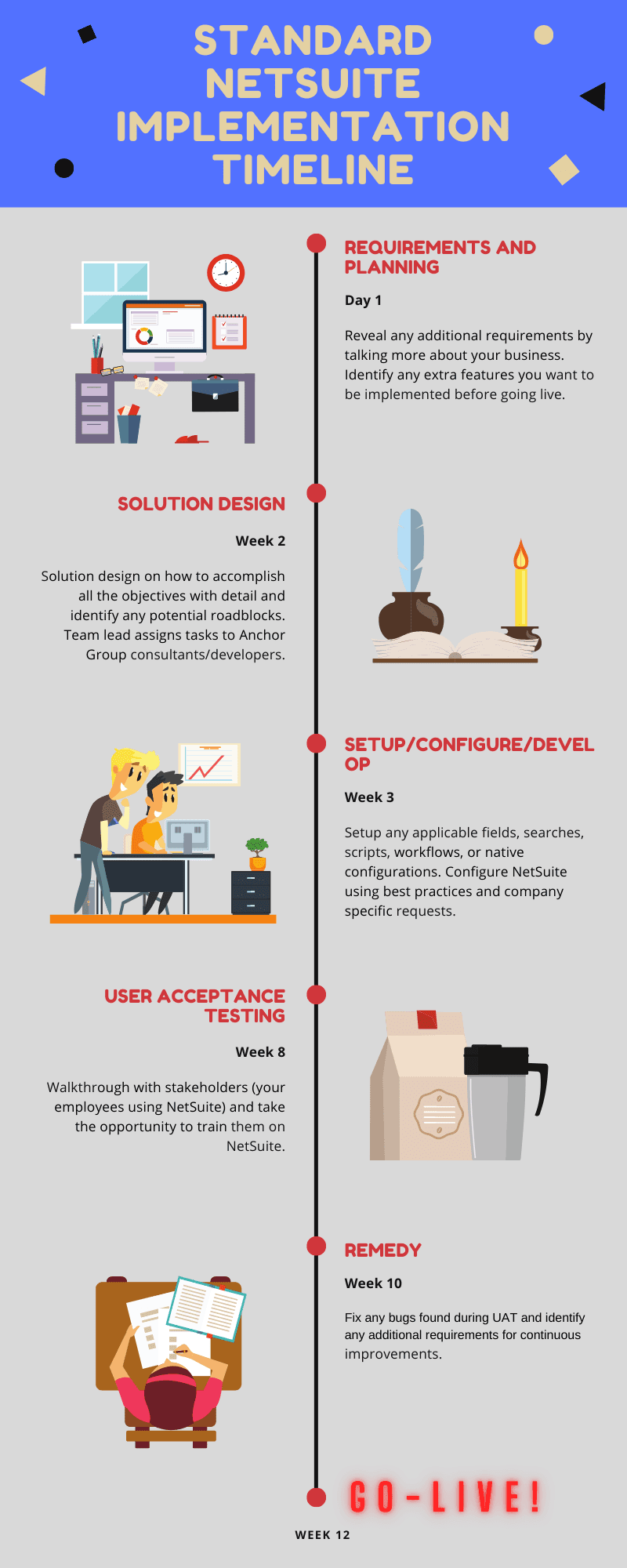
It's important to get an idea of how long your NetSuite implementation might take so you can plan the transition from the other software you are migrating away from. This is an infographic of a standard NetSuite implementation timeline that breaks down the typical project. In some cases, you will want to expand the timeline to accommodate a larger scope of work. Most companies with annual revenue under $20 million will fit this NetSuite implementation timeline. More complex NetSuite implementations can take up to 32 weeks to complete.
This is a brief description of a simple, standard, and complex NetSuite implementation.
- Simple – Pretty simple implementation with a smaller company with fewer than 10 NetSuite users. Usually, annual revenue is between $5 - $50 million.
- Normal – The company might have multiple entities, require more than 4 NetSuite modules, and have between 10 and 100 NetSuite users. Usually, annual revenue is between $50 - $200 million.
- Complex – Large organization with annual revenue above $200 million and requiring more than 100 NetSuite users. This will require more extensive customization due to the complex web of business processes that have evolved as the company has grown.
Major Factors that Add to NetSuite Implementation Length
- Data migration and the amount of data you want to clean up from the historic system (If you can, try to limit the amount of data you want to migrate to save time on the implementation.)
- Number of staff that can be dedicated and highly available for quick responses.
- Quantity and complexity of unique Customizations/Functional Gaps
- Number and types of 3rd party integrations into NetSuite
- Quantity of NetSuite Users
- Different Types of Currencies
- Number of Company Subsidiaries
- Number of physical locations
NetSuite Implementation Post Go Live Timeline
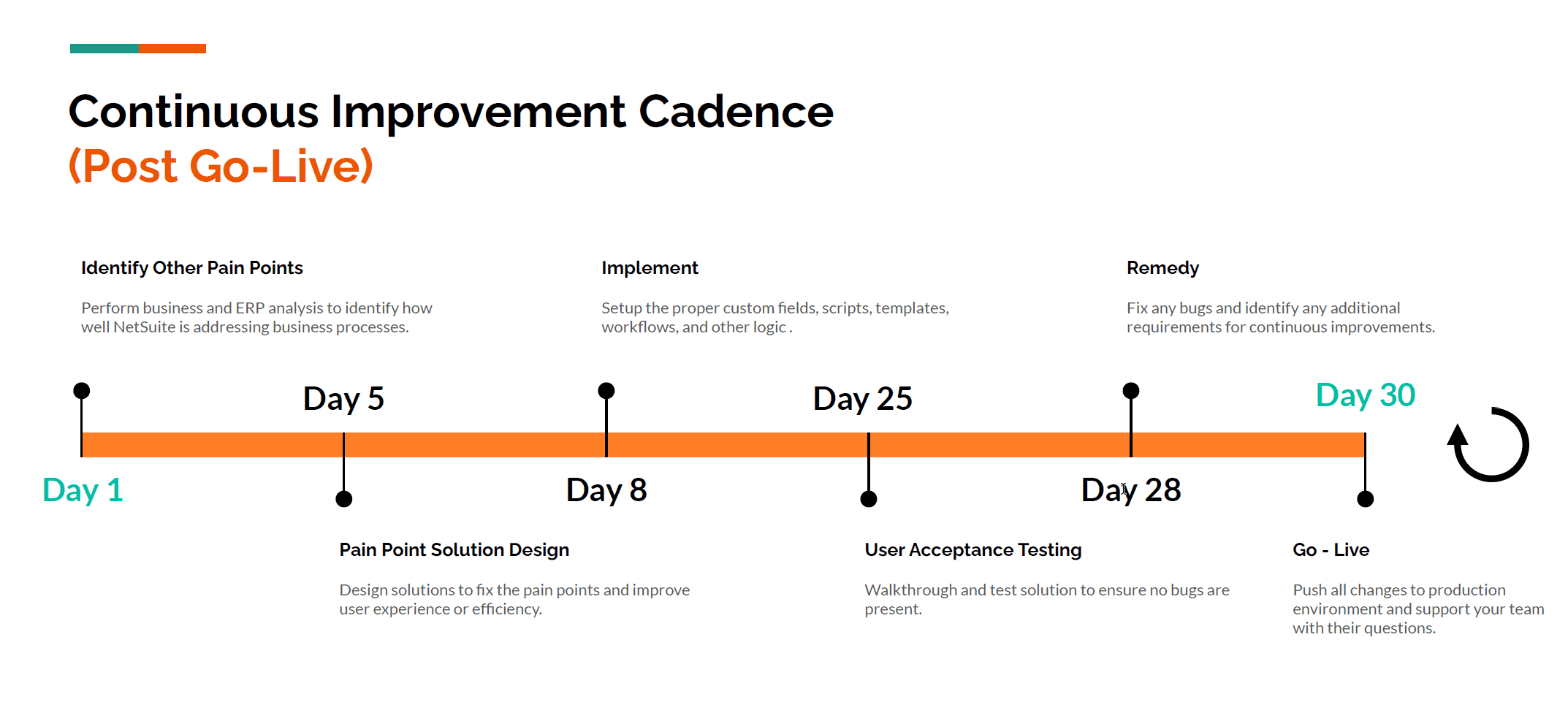
There will always be requirements that pop up during implementation as you think more deeply about what you want. To help keep your implementation on track, consultants often suggest multiple post-go-live phases to ensure you get moving in NetSuite with a minimum viable product (MVP). This means that some products should be deferred until later if they are not critical to your business's short-term success. There should definitely be a continuous improvement plan with these ideas planned out ahead of time. That's why we often pull together a continuous improvement timeline to give clients an idea of where their future projects might lie. In addition, we establish a cadence to identify areas for improvement that have not yet been fully considered, so we can find low-hanging fruit that will greatly improve your business transformation.
Here is the Anchor Group's continuous improvement cadence after all post-go-live phases have been completed.
NetSuite Implementation Partner
Anchor Group was voted the #1 NetSuite Consulting Firm by GoodFirms in 2020 and is currently on track in 2021! Plus, the #2 ERP consulting firm in the United States, according to Superb Companies. The team holds all NetSuite certifications and has team members who have completed over 50 full life-cycle NetSuite and SuiteCommerce implementations. Plus, the team (including NetSuite developers) is entirely located in the United States. You can be sure that you are getting the support you need without having to deal with time zones outside of the United States.

Most companies prefer smaller companies because they can provide the personal attention needed without getting lost in support cases or a jungle of steps to reach the right person to answer a question. Anchor Group has purposefully limited the number of NetSuite implementations it performs each year. The reason for this is to provide top-notch NetSuite implementations and to be available for post-go-live support. The same people working on the implementations can continue working on post-go-live projects without being pulled away for another ERP implementation.
Have other questions like these common NetSuite questions?
- Is there a “best” NetSuite implementation process?
- How much does it cost to implement NetSuite?
- How do I pick a NetSuite implementation consultant?
- What are some common NetSuite implementation issues?
- What causes NetSuite implementations to fail?
- What are my NetSuite Implementation options?
Let's break down a few of the common questions you may still have...
Is there a “best” NetSuite implementation process?
The best NetSuite implementation process will focus on your business's specific needs. There are general guidelines, such as requirements, configuration, user acceptance testing, training, go-live, and support. But these are fairly general. As you delve into the core requirements, you will uncover areas that require specialized processes. In general, using proper project management processes, such as Agile, can help ensure the project runs smoothly. There should also be a Gantt chart to show the overlapping components of the implementation.
How much does it cost to implement NetSuite?
The cost varies depending on your requirements. In general, most companies buy NetSuite with Advanced Financials and at least one other module. You can expect this to take about 350 hours and cost between $50,000 and $100,000. Make sure to be aware of future maintenance expenses, too, and budget at least the equivalent of a specialized IT manager's salary.
The reason we need to start this chapter with a disclaimer is the complexity. Business process complexity is a critical factor in determining the cost of your NetSuite implementation. And since every business is different, it’s hard to provide an estimate without knowing the specifics.
If we had to give you a range, depending on the size of your business and the complexity involved, an average NetSuite implementation could cost between $25,000 and $100,000, and possibly more. There are some primary cost factors to a NetSuite implementation. These include migration, customization, 3rd-party integrations, and training.
How do I pick a NetSuite implementation consultant?
You should pick a NetSuite implementation consultant who has completed 5+ full life-cycle NetSuite implementations in your vertical and has touched over 20 NetSuite instances. There should be at least one person on the implementation team with these qualifications.
What are some common NetSuite implementation problems?
Lack of buy-in from employees typically results from a failure to fully train them on the new system. As a C-Suite leader, you should be able to manage change effectively. If you have not managed major system changes like this before, you should read some books about managing change.
Another reason for implementation issues is forgetting to keep it simple and avoid focusing on a minimum viable product. It's important to start small and create phases for improving the ERP over time.
What causes NetSuite implementations to fail?
Usually, it's because you have chosen the wrong company to implement it, there's a lack of effective training, or you're trying to fit in every wish list item before going live. These are all avoidable failure points and can be avoided with due diligence, proper role-specific training, and continued push to address wish list items after your initial go-live.
What are my NetSuite Implementation options?
There are really only three primary options for your NetSuite implementation.
Self-Implementation:
This would be if you wanted your own staff to implement NetSuite. This is where a majority of NetSuite implementations fail. The only time where it would make sense for this is if you have NetSuite developers and consultants already on staff with enough experience. Otherwise, it is highly unlikely you will be satisfied with NetSuite.
Direct Implementation:
This would mean using NetSuite, the company, directly. They have many good statements of work and ways to reduce pricing through fixed bids. However, NetSuite's implementation and professional services do not have a good reputation for being consistently high quality. It's really a matter of luck who you get assigned to and where in the world they are located. Companies are often tempted to go this route because they are the product makers, but NetSuite partners tend to pick up the most talented consultants.
Partner Implementation:
The majority of NetSuite implementations with positive feedback come from NetSuite partners. This is mostly because of the personal attention clients receive, and the value partners place on each customer.
NetSuite Implementation Checklist
- Here are a handful of tasks you should finish at the start of a NetSuite implementation.
- Determined NetSuite is the proper fit
- Received multiple implementation estimates
- Carefully select who you are buying licensing from (you don't need to use them to implement)
- Found NetSuite Implementation Partner
- Designated internal support team
- Identified all stakeholders and NetSuite users
- Created business flow maps to communicate requirements more effectively
- Identified areas of business that NetSuite will service
- Identified NetSuite budget for implementation
- Identified budget for post-go-live services
- Initiated search for NetSuite full-time candidates, knowing it takes up to 2 years
- Thought through the wish list and MVP requirements
- Identified 3rd-party solutions you want to integrate with NetSuite
- Company point of contacts of subject matter experts have removed significant chunks of time from their schedule to be dedicated to ERP
- Go-Live date set and confirmed with consultants
Related Articles:
- Custom Forms for Implementation
- NetSuite for Service Companies
- NetSuite Optimization
- ERP implementation best practices for NetSuite deployment
- Top 10 Reasons Why NetSuite ERP Implementations Fail
Hopefully, this post gives you something to work with as you try to understand NetSuite and what it can do for your business. If you have any questions and want some free consulting advice, feel free to contact our team at Anchor Group.

Tagged with Training, Services & Support, ERP Implementation